What role does the voluntary sector play in a world that feels increasingly uncertain?
Inspired by the recent Reith Lectures, Dr Miranda Millan—Spark Somerset’s Head of Development and Chair for Trustees of Love Glastonbury—explores this question in our latest blog.
“I’ve been listening with interest to the 2025 Reith Lectures, arriving as they do at a moment when many people feel the ground shifting beneath them. Public trust is fragile, political language is hardening, and everyday life feels less predictable. Rutger Bregman’s core argument — that moral progress depends on ordinary people choosing decency and organising around it — resonates deeply with what our community of volunteers already do at Love Glastonbury Charity, and what the third sector more widely does in Somerset.
“Across the county, community organisations like ours, relying heavily on local volunteers and supporters, are often the most consistent front-line presence in many people’s lives. Not because we are loud or ideological, but because we are reliable. Organisations like ours hold space when systems change, funding cycles end, or policies swing. In villages, towns and neighbourhoods, collectively we offer something increasingly rare: continuity, care and moral steadiness.
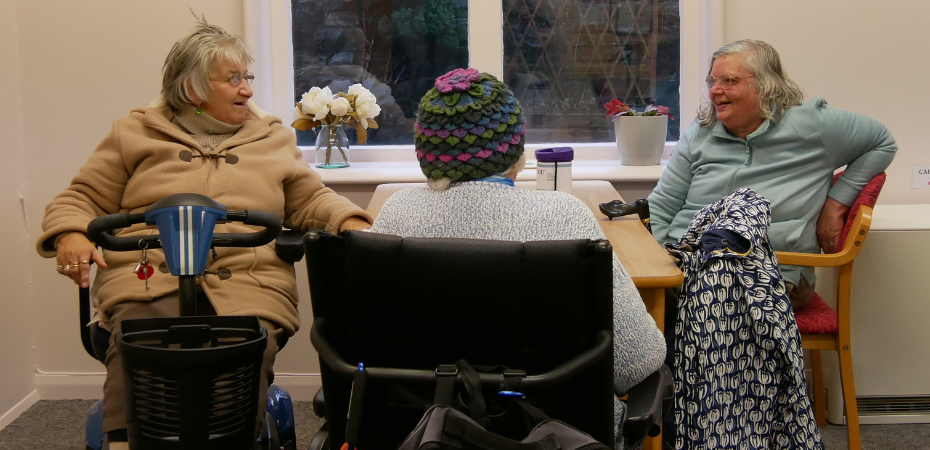
“Local organising in Somerset is rarely dramatic. It looks like neighbours checking in, volunteers stepping up, youth workers creating spaces where young people can test ideas safely, and community leaders quietly holding tensions before they escalate. This work doesn’t always call itself “political”, but it is profoundly civic. It models fairness, dignity and mutual responsibility at a time when public debate often rewards division.
“One of the strongest implications of the Reith Lectures for the third sector is the idea that decency needs defending. It doesn’t survive on good intentions alone. When misinformation spreads, when exclusionary narratives creep into everyday conversation, and when fear becomes normalised, local organisations are often the first to respond — not with slogans, but with presence, relationships and practical action.
“This gives the third sector a role that is easy to underplay: moral anchoring. Not telling people what to think but showing — through everyday practice — what it looks like to value people, to listen, to disagree without dehumanising, and to act collectively rather than retreat into individualism.
“In Somerset, this matters because of scale and distance. Rural isolation, transport barriers and digital exclusion mean that national conversations don’t always translate locally. The third sector helps interpret the moment, grounding big ideas in lived reality and keeping communities connected to one another rather than pulled apart.
“If the Reith Lectures offer one clear message for Somerset, it is this: the future is shaped less by grand narratives than by who shows up consistently in times of need and keeps choosing decency over division. That is the quiet, essential work of the third sector — and its intrinsic moral value should be named and taken seriously.
“So now more than ever, we need to nurture and support our sector. As a charity that champions other charities, we are here to do just that, helping you strengthen your organisation and its impact. Visit our Get support page to find out how.”