When I put myself forward as a Spark trustee, it wasn't because I thought I had all the answers. Quite the opposite.
What I’ve learned over many years working across health, local government, social care and the voluntary sector is that the world never stands still. Structures change, priorities change. New partnerships emerge, old ones disappear. Funding comes and funding goes. Acronyms always seem to multiply at an alarming rate.
But if there’s one thing I’ve become certain of, it’s that change is coming. That’s not a reason to panic, but it’s a good reason to pay attention.
As trustees, one of our jobs is to lift our heads above the day-to-day and look a little further ahead. Not to predict the future, but to ask the right questions.
What’s changing around us?
What opportunities might be emerging?
Who should we be talking to?
And are we building the relationships we’ll need for whatever comes next?
Relationships are infrastructure too
Looking back over my career, I’ve spent much of it helping organisations work together. Health and social care. The public sector and the voluntary sector. Large organisations and small community groups. I’ve seen countless restructures, new models, new programmes and various ‘new ways of working’.
Consistently though, I’ve found the thing that makes the biggest difference isn’t the structure alone. It’s the relationships. The ability to pick up the phone. The trust built over time. The conversation that happens before there’s a problem. That’s why I sometimes think we overlook one of the most important forms of infrastructure we have: relationships.
We invest in buildings, systems and strategies (quite rightly). But when circumstances change, it’s often trusted relationships that help us navigate what’s next and ensure we emerge stronger.
The view from the community matters
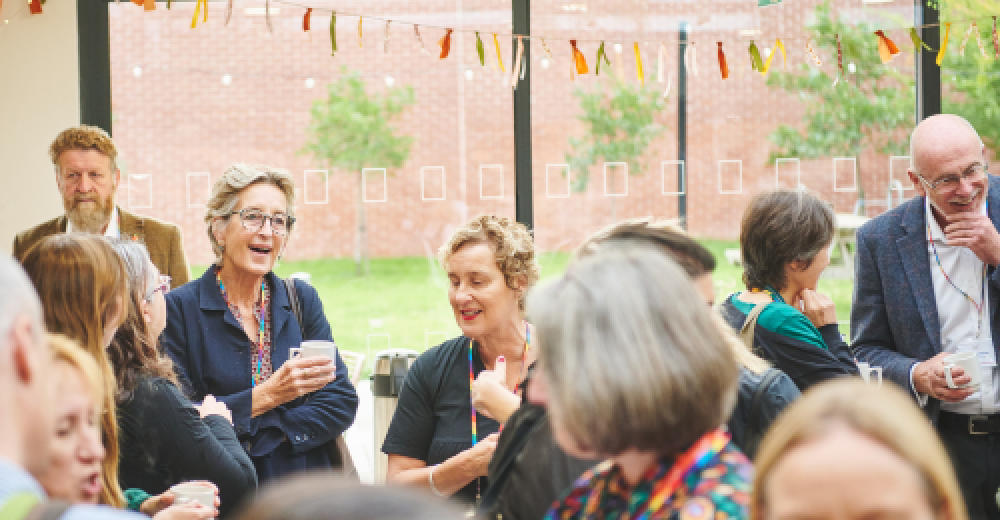
Some of the most valuable conversations I’ve had haven’t happened in boardrooms, they’ve happened in community cafés, on health walks and in village halls.
Recently, I was reflecting on a local “Come and Talk” table that appears every week in a café near me. There’s no agenda. No presentations. No strategy paper. Just people talking. And it’s always full.
People want connection, they want to share ideas, solve problems and ultimately, support one another. Watching that table fill up week after week reminded me that communities often understand their own needs long before they appear in a report, strategy or funding application.
As trustees, we need to make sure we’re encouraging our organisations to listen to the voices in the communities they serve. Not because it’s the right box to tick, but because that’s where some of the most useful insight is found. And it should encourage us to ask ‘Do we have the right relationships? Are we listening? And are we learning?’
Staying curious
One of the risks for any organisation is becoming too focused on its own world and trustees can play an important role in challenging that.
For me, good trusteeship isn’t just about governance and oversight, important though those things are. It’s about curiosity. It’s about noticing what’s changing, asking questions and staying connected to the people and places an organisation exists to serve. Just as those at the ‘Come and Talk’ table bring ideas and passionately talk around what a solution might look like and how they might get there, so to do trustees.
We don’t need to have all the answers but we do need to be willing to ask the right questions, be willing to keep listening and learning, and push our organisations to keep investing in that all important infrastructure that binds us: relationships. Afterall, the organisations that stay curious and connected are often the ones best placed to adapt when change comes.
A final thought
Change rarely arrives exactly as we expect it. The organisations that weather it best aren’t always the biggest or the most sophisticated. But they can often be the ones with strong relationships, deep roots in their communities and people who are willing to listen and adapt.
That’s one of the reasons I became a trustee. Not because I have all the answers, but because I care about what comes next.
Trusteeship certainly carries responsibility. It should. But it also gives you an opportunity to contribute your experience, ask questions, build connections and help shape the future of an organisation.
If you’ve ever looked at a trustee board and thought, that’s probably not for someone like me, I’d encourage you to think again.
You don’t need to have all the answers.
You don’t need a particular job title.
And you certainly don’t need to be the loudest voice in the room.
Sometimes what organisations need most is someone who cares, asks good questions and brings a perspective that others may not have. In the years ahead, I suspect we’ll need a lot more of that.
You can find out more about becoming a trustee here and if you’re interested in building and strengthening your relationships, find out how Spark can help.
Belinda Lock: Belinda’s background includes roles in dementia advocacy, vocational education, and workforce development, with a wealth of expertise in governance, safeguarding, and collaborative partnership building. She is committed to empowering communities and supporting delivery of high-quality, person-centred services.
Meet the rest of our trustees and Spark team here